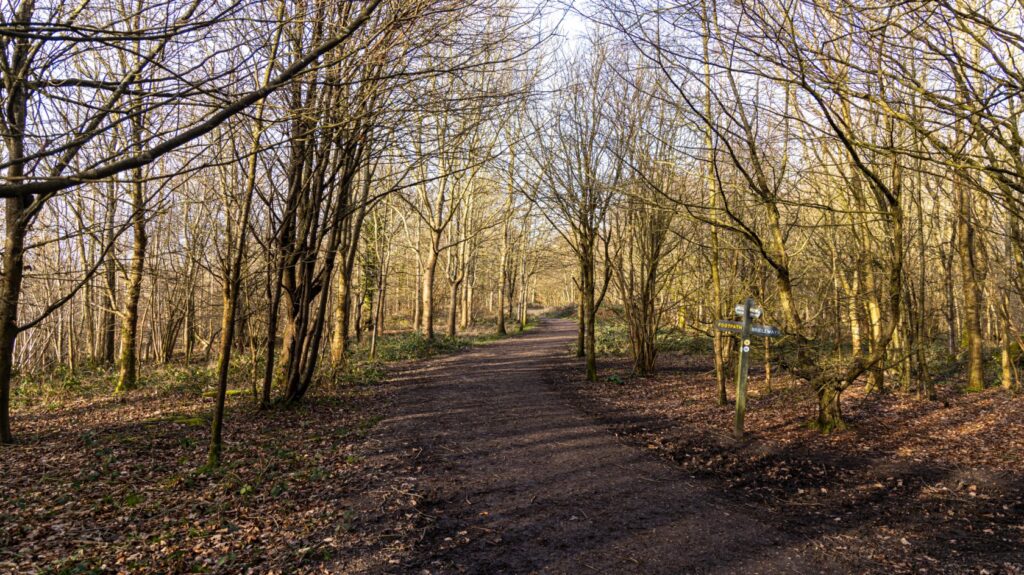
The Ridgeway and Great Chalk Way
The Ridgeway National Trail
History
In 1949 the National Parks and Access to the Countryside Act created the National Parks and six National Trails, including the Ridgeway.
The present route of the Ridgeway National Trail was designated by the Government in 1972. The Trail opened in 1973 with a ceremony at Coombe Hill monument in Buckinghamshire, chosen because it was the location of a mass trespass by local people in 1906. Read about the Coombe Hill Trespass
Since 2015 the Ridgeway Partnership, comprising local authorities, representatives from the Chilterns and North Wessex Downs National Landscapes, the Ramblers, the British Horse Society among others is responsible for managing the Ridgeway National Trail.
Read about the Ridgeway’s 50th anniversary celebrations in 2023.
Ridgeway National Trail
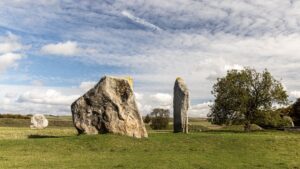
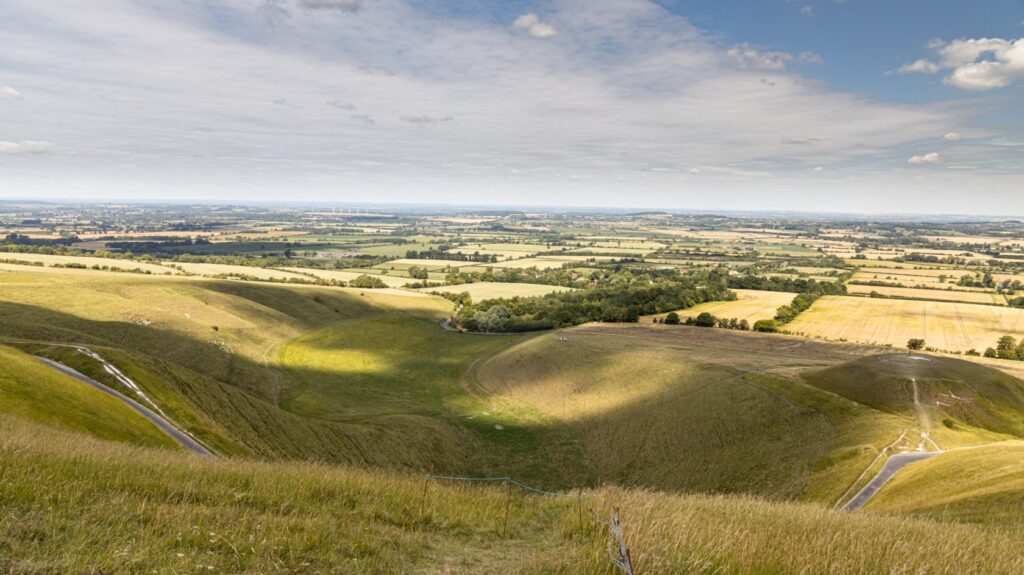
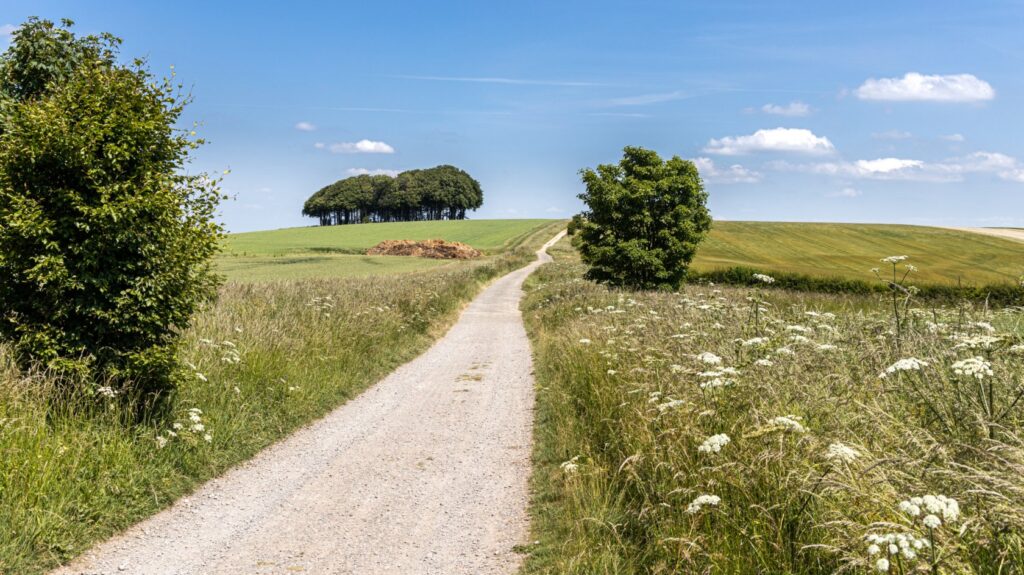
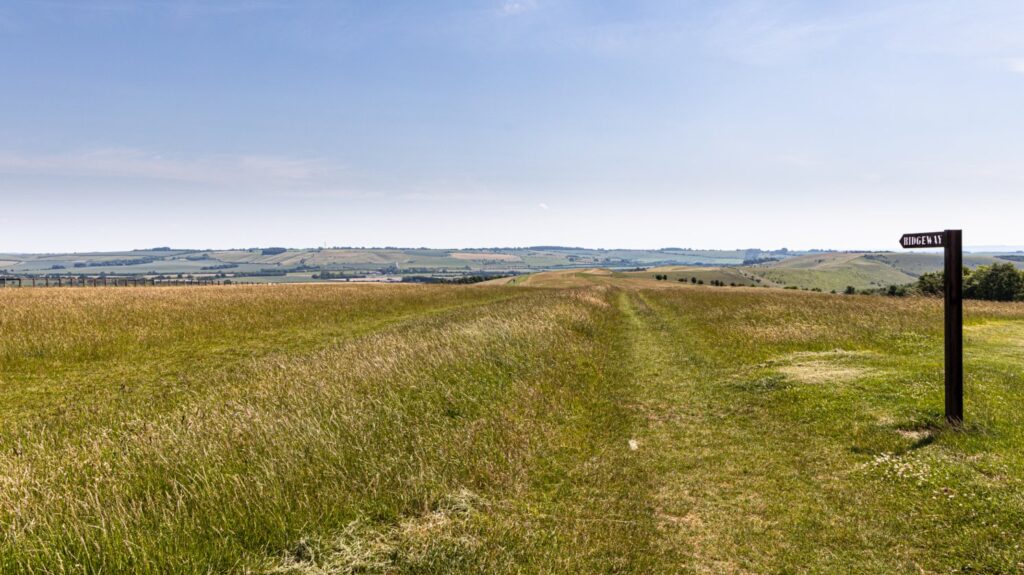
The Ridgeway National Trail follows public rights of way along 87 miles (140 km) between Overton Hill, part of the Avebury World Heritage Site in the North Wessex Downs National Landscape, and Ivinghoe Beacon near Tring in the Chilterns National Landscape.
The Ridgeway National Trail officer and a volunteer coordinator work with local highway authorities responsible for maintaining their public rights of way networks. A team of volunteers carries out mowing, installs fingerposts and monitors the Trail’s condition.
The Ridgeway National Trail website includes descriptions of the Trail, interactive maps, advice on parking, public transport and wild camping, water points, accommodation and places to visit.
The Historic Ridgeway Project, which is supported by The Friends of the Ridgeway, highlights many historic landmarks along the Trail, from the Neolithic barrows and Iron Age hill forts to a 20th century World War II airfield.
Great Chalk Way
The Great Chalk Way has often been called Britain’s oldest road as it is thought to date from Neolithic times (c4000BCE). It follows the high chalk escarpments across southern England from Dorset to Norfolk. Through the centuries it provided a relatively safe route for travelers, including traders, armies, shepherds and cattle drovers.
The Great Chalk Way comprises four existing long-distance paths: the Wessex Ridgeway, the Ridgeway National Trail, the Icknield Way Path and the Peddars Way National Trail, and two new ones: the Sarsen Way and the Cranborne Droves Way.
It is approximately 360 miles long, from Lyme Regis in Dorset to Holme next the Sea in Norfolk, with alternative routes between Win Green on the Wessex Ridgeway and the Ridgeway National Trail at Avebury. These alternative routes are described on The Great Chalk Way map, which also has links to the other long-distance paths that make up The Great Chalk Way.
People walking from south to north have a choice of route when they arrive at Win Green; either to go east on the Sarsen Way and Cranborne Droves Way via Salisbury, or to stay on the Wessex Ridgeway.
People walking from north to south need to decide which route to take when they arrive at the Green Street/Herepath turn off to Avebury from the Ridgeway National Trail.
The Great Chalk Way passes through five protected landscapes:
- Dorset National Landscape
- Cranborne Chase and West Wiltshire Downs National Landscape
- North Wessex Downs National Landscape
- Chilterns National Landscape
- Norfolk Coast National Landscape.
These protected landscapes offer wonderful experiences to long-distance walkers through magnificent countryside that is cherished by local communities. Stonehenge World Heritage Site is a short detour off the route if the Sarsen Way route via Salisbury is taken.
The Great Chalk Way is also rich in archaeological sites, such as the Avebury World Heritage Site, Wayland’s Smithy long barrow on the Ridgeway National Trail, and many Iron Age hill forts and historic monuments.
Preview The Great Chalk Way with John Tippetts, a long-distance walker, who wrote a fascinating illustrated blog about his experiences on the route in 2025.